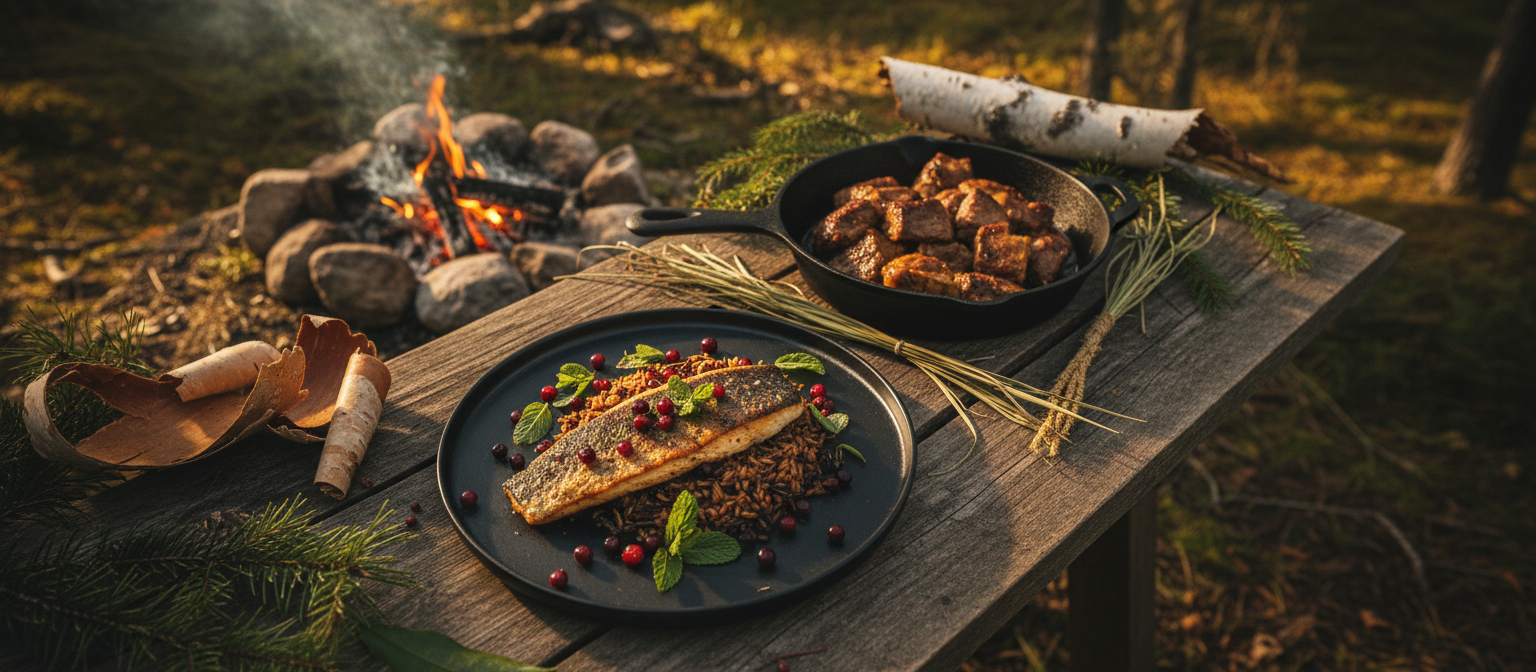
Trapline to Table
Restorative Food Sovereignty & Culinary Artistry
Chef Parenteaux (Justin Brown)
The Philosophy of Trapline to Table
Trapline to Table is more than a culinary methodology; it is a restorative movement that bridges ancestral land-based knowledge with the rigour of contemporary gastronomy. Grounded in the sacred landscapes of Manitoba, this framework honors the seasonal rhythms, tracking systems, and ecological balance that have sustained Indigenous communities for generations.
"The land is our first kitchen, our primary pharmacy, and our greatest teacher. When we harvest from the trapline, we are not merely collecting ingredients—we are actively engaging in a historical dialogue of survival, respect, and reciprocity.
By centering culinary systems on wild proteins, gathered botanicals, and traditional preservation methods, Trapline to Table challenges the vulnerabilities of modern industrial food networks. It establishes a culinary identity rooted in place, preserving the dignity of the harvest from the initial track to the final modern plate presentation.

An Institutional Blueprint for Canadian Education
Integrating Trapline to Table into Canada's vocational and secondary school systems addresses a critical gap in institutional home economics and culinary training. Traditional culinary programs heavily favor European classical structures, inadvertently distancing young Indigenous learners from their cultural identity and leaving non-Indigenous students unacquainted with the true terroir of western Canada.
By transforming domestic science rooms into spaces for land-based learning, schools can offer accredited frameworks that teach sustainable wildlife management, indigenous botany, and intergenerational storytelling. This model fosters community self-reliance, directly combats regional food insecurity, and provides marginalized youth with viable, dignified career pathways in the hospitality sector.
The Power of Storytelling
In our tradition, a recipe is never just a list of measurements—it is a narrative container. When students learn to prepare a dish, they are told the stories of the elders from the Pine Creek Reservation, the histories of seasonal migrations, and the cultural laws of giving back to the earth. This methodology shifts the culinary arts from a technical trade to a holistic, intergenerational healing tool.
Harvesting & Preservation Systems
True food sovereignty relies on mastering the seasonal mechanics of the land. Below are the core systems practiced within the regional biomes of Manitoba.
Boreal Forest & Muskeg Region
Big game hunting (Moose, Elk) relies on strict tracking protocols, respect for migratory patterns, and harvesting only what the ecosystem can spare. Gathering focuses on Labrador tea, wild mint, and spruce tips, harvested strictly by taking less than one-third of the visible plant community to ensure regeneration.
Cold-smoking over selected hardwoods (such as birch and willow) to cure proteins slowly without rendering vital fats, followed by precise air-drying to withstand seasonal storage.
Prairie, Wetland & Waterway Region
Utilizing historical migratory flyways for waterfowl (Goose, Duck) and utilizing clean netting techniques for freshwater fish (Pickerel/Walleye) within interior river networks. Foraging targets wild prairie turnips, saskatoon berries, and chokecherries.
Sun-drying and dehydration of berries and roots, alongside the traditional manufacturing of pemmican—pounding dehydrated lean meat into a fine powder and blending it with rendered tallow and acidified berry pastes for shelf-stable food sovereignty.
Trapline Management
Seasonal traplines follow centuries-old routes across boreal terrain. Trap placement is guided by animal sign, water flow, and lunar cycles — harvesting only within the natural surplus of the local population to ensure perpetual renewal.
Net & Ice Fishing
Under-ice gill-netting targets Walleye and Pickerel during the winter dormancy period. Nets are set at precise depths determined by water temperature and species behavior, checked at dawn to minimize stress and maximize freshness.
Botanical Foraging
Wild plants — Labrador tea, cattail pollen, spruce tips, and prairie sage — are gathered by hand using the one-in-three rule: never more than a third of any stand is harvested, preserving seed stock and root systems for successive seasons.
Air-Curing & Smoking
Proteins are dry-salted, then hung in purpose-built smoke houses fed with green willow and birch. Low-temperature cold-smoking over 8–12 hours builds a preservative bark while retaining the moisture and fat essential to winter nutrition.
Culinary Arts: From Land to Plate
These recipes demonstrate how heritage ingredients are elevated using professional culinary execution, suitable for both community feasts and institutional training.
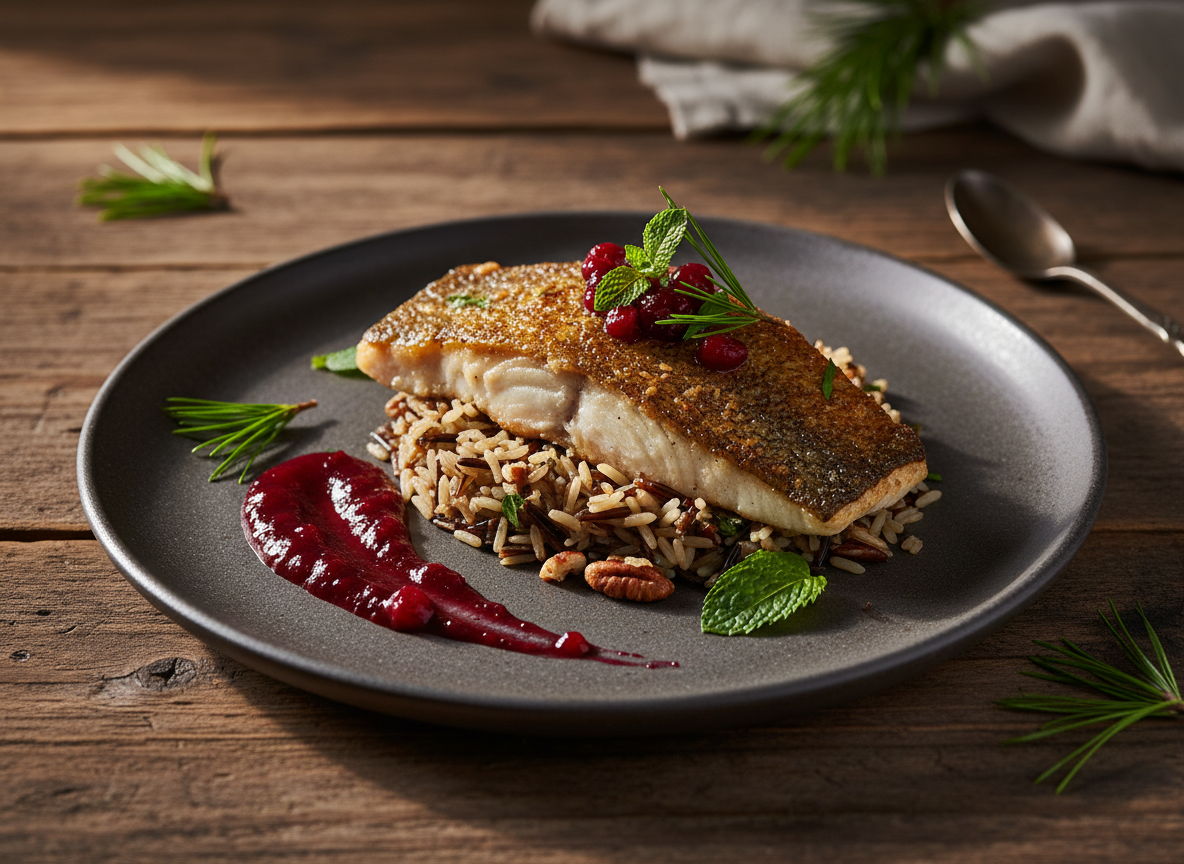 01
Cedar-Basted Pickerel Fillet
with Wild Rice Pilaf & Bog Cranberry Reduction
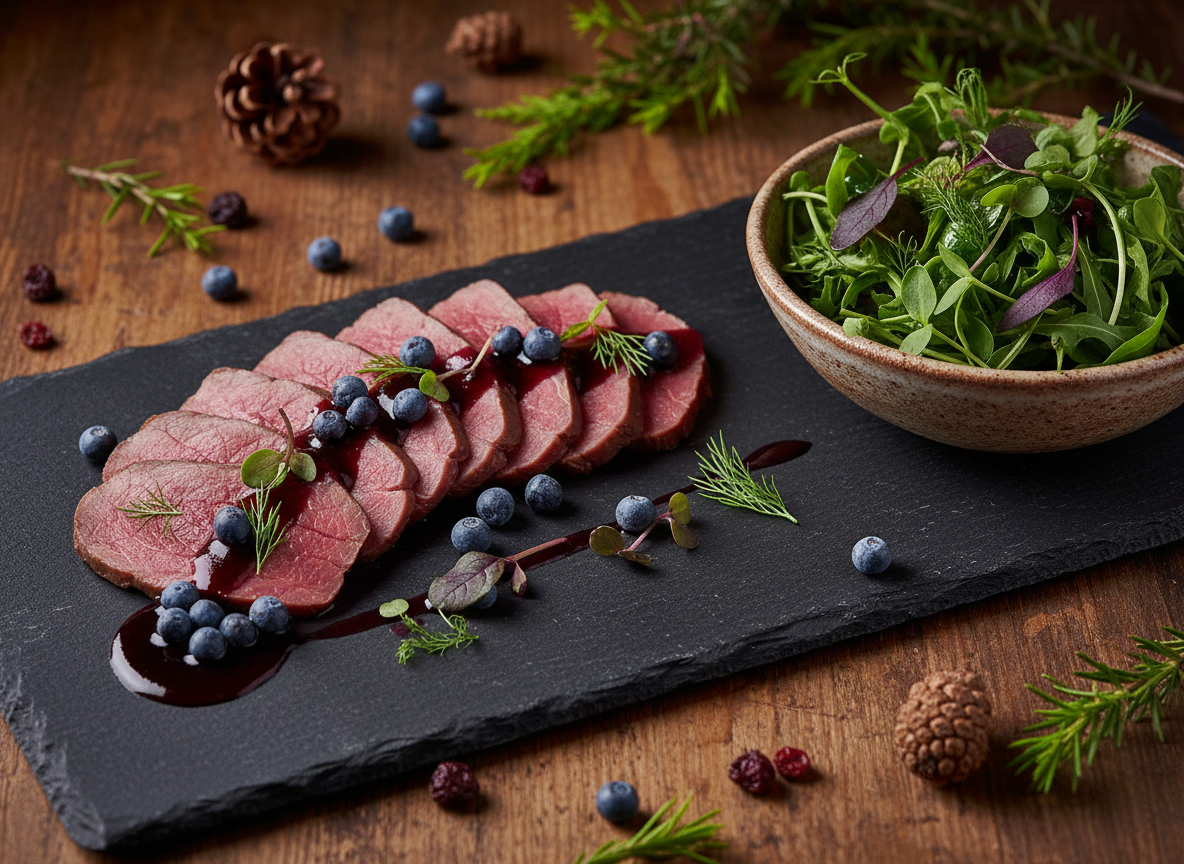 02
Smoked Goose Breast
with Saskatoon Berry Gastrique & Willow-Smoked Jus
Pemmican & Bannock
Traditional Trail Ration — Elk Pemmican with Skillet Bannock
Gallery
A visual record of ingredients harvested from the land and transformed through the craft of culinary artistry.
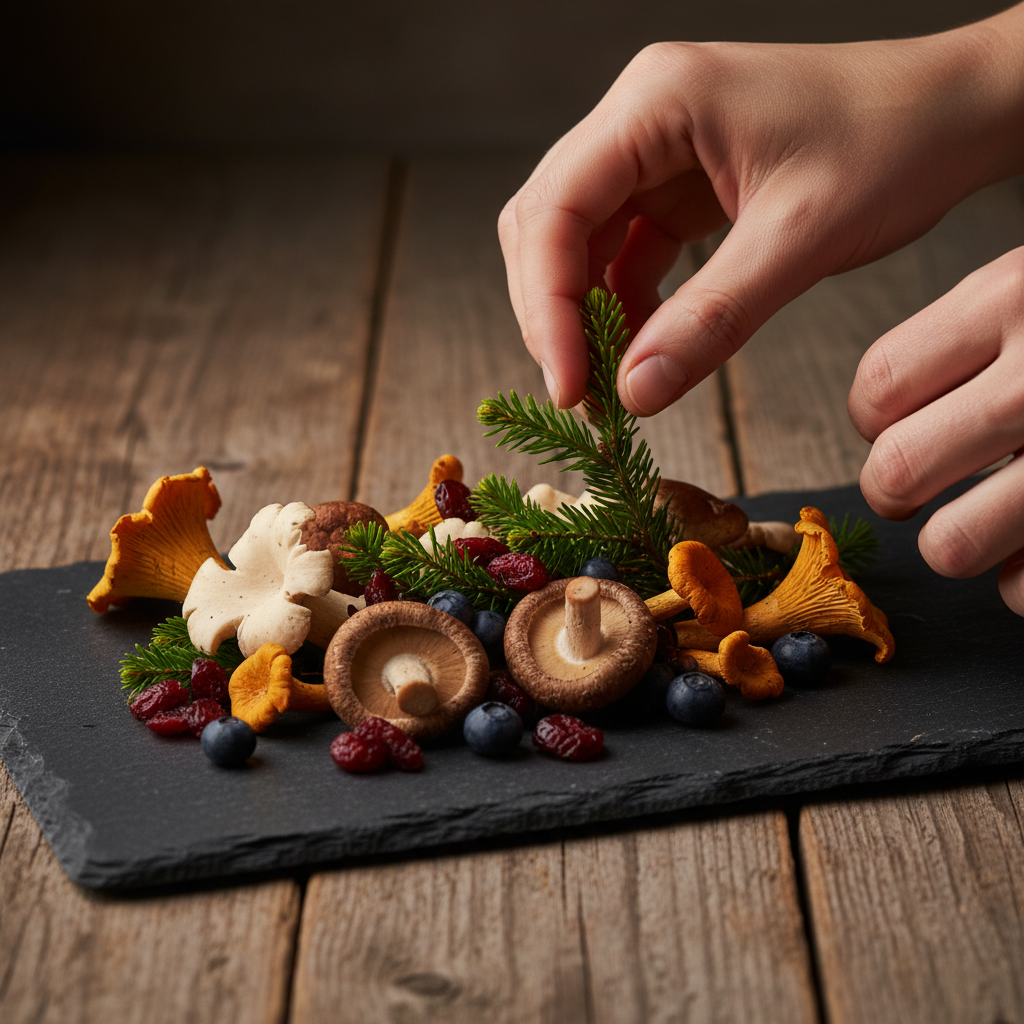
Wild Foraged Ingredients
Mushrooms, spruce tips, and dried berries — the building blocks of the boreal pantry.

The Wild Harvest
Saskatoon berries, wild rice, Labrador tea, and spruce tips arranged in a traditional flat lay.

Traditional Pemmican
Rendered tallow poured over pounded dried meat and crushed saskatoon berries.
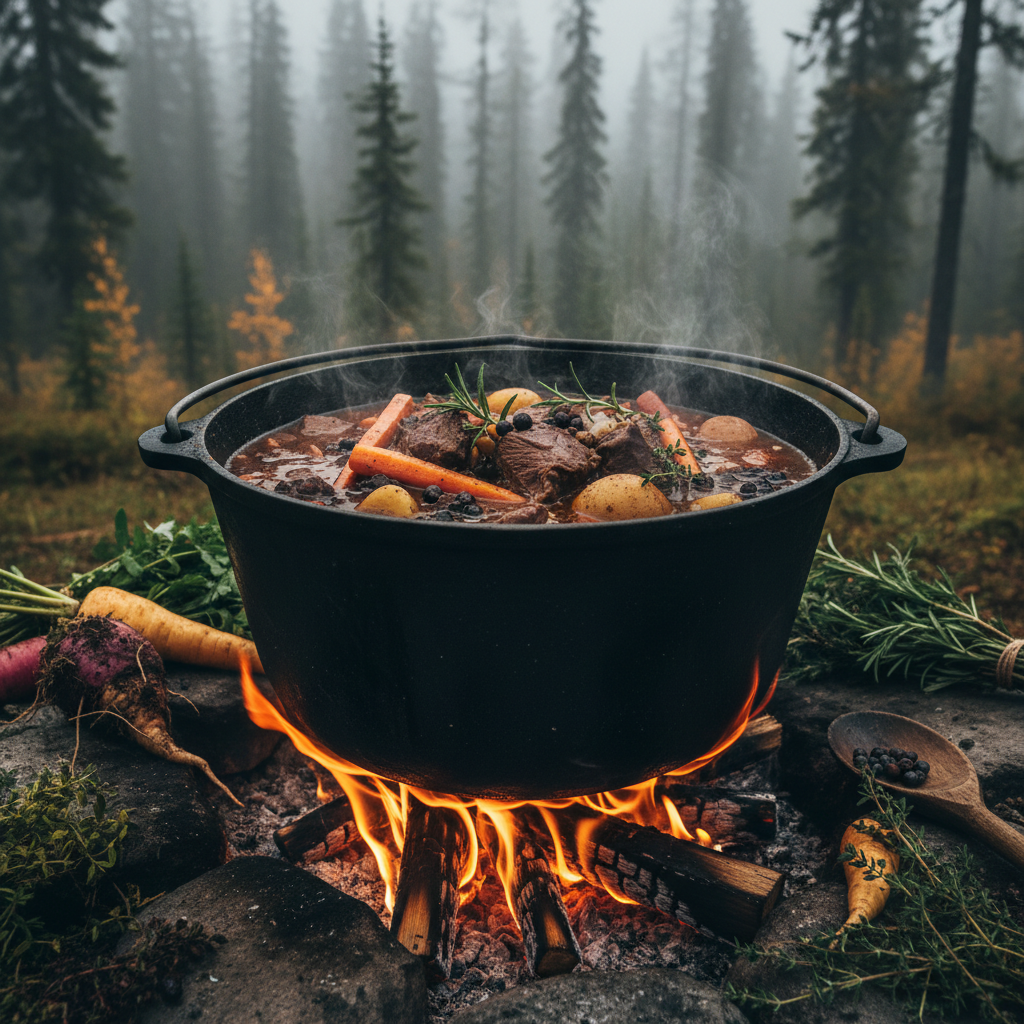
Open-Fire Moose Stew
A cast iron pot of wild moose stew simmering over open embers in the boreal forest.
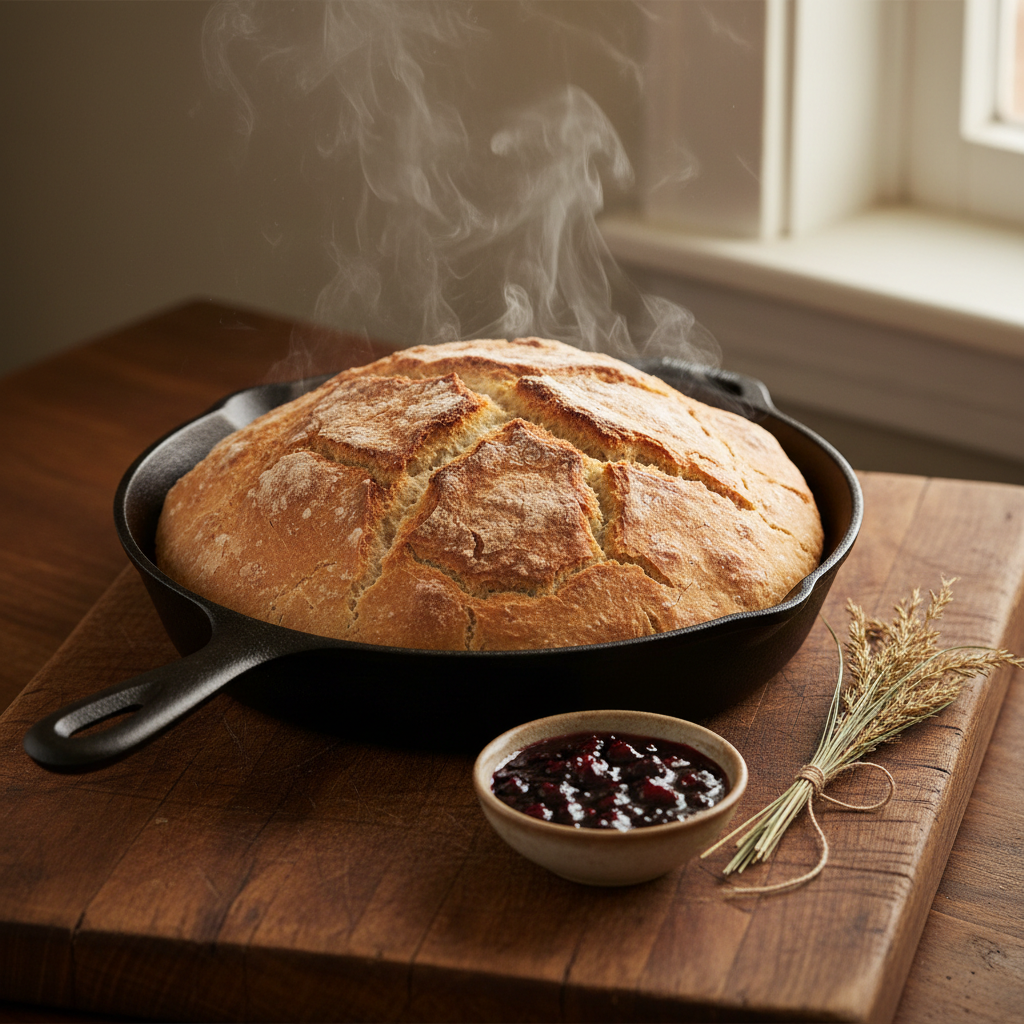
Golden Bannock
Fresh bannock from the cast iron pan, served with wild berry jam and dried sweetgrass.
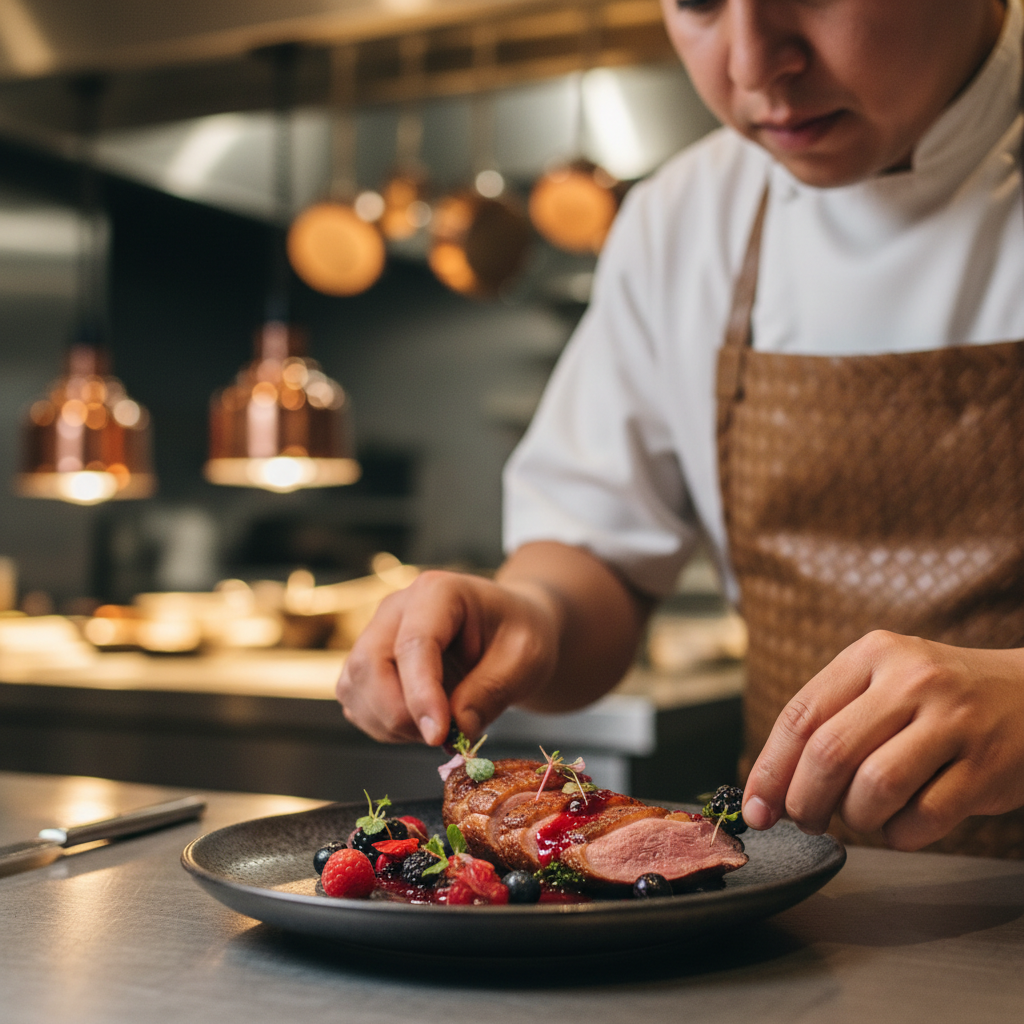
The Plating Craft
Chef Parenteaux at work, elevating smoked waterfowl into a refined modern presentation.
Work With Us
Whether you're planning an event, exploring a partnership, or looking to bring Trapline to Table into your institution — we'd love to hear from you.
Chef Parenteaux
Justin Brown
Pine Creek Reservation, Manitoba
Affiliation
Nostalgia Culinary Company
Canadian Culinary Federation
Inquiry Types
- Event Catering
- Educational Partnership
- Media & Press
- Culinary Collaboration
- Speaking Engagement
- Other

